Vintage & Retro Computer Project

Rescue, Repair & Relive Yesterdays Technology

Today’s Date: Wednesday, Apr 29

RETRO DATE:
70’s – 80’s – 90’s

Relive classic computing with the

Explore curated resources by machine (Commodore 64, Amiga, BBC Model B, ZX Spectrum, and more) plus a blog of hands-on experiences: repairs, upgrades, games, demos, and the weird stuff you only learn by using the real hardware.

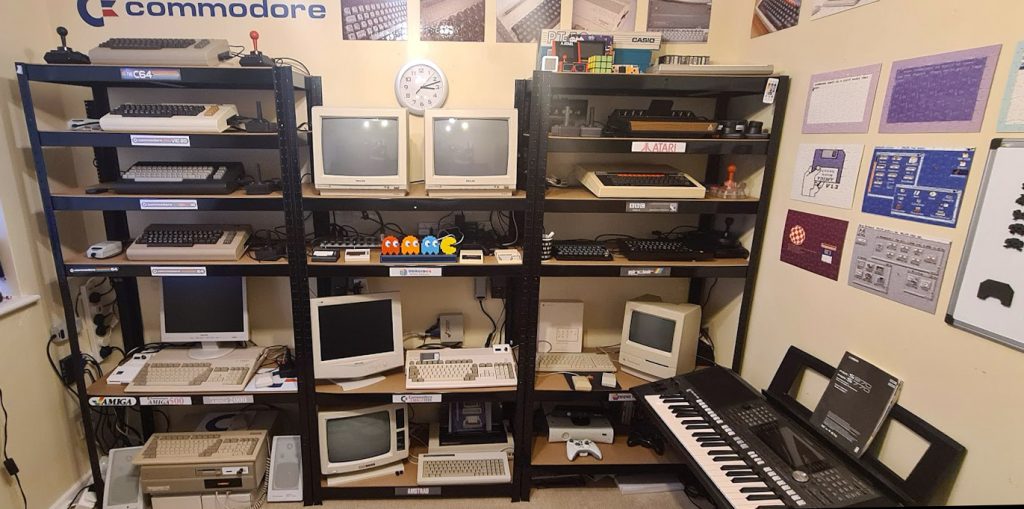
My RETRO ROOM project consisted of computers and systems that reminded me of my youth and systems that I have previously owned and ones that had a significant impact on my life growing up.

Apart from nostalgia, they marked important milestones in my life and bring me a lot of happy memories as well as reminding me of lost skills and how diverse my knowledge and skill base was as we have grown into an Apple vs everyone else world.

from 1980 – 1984

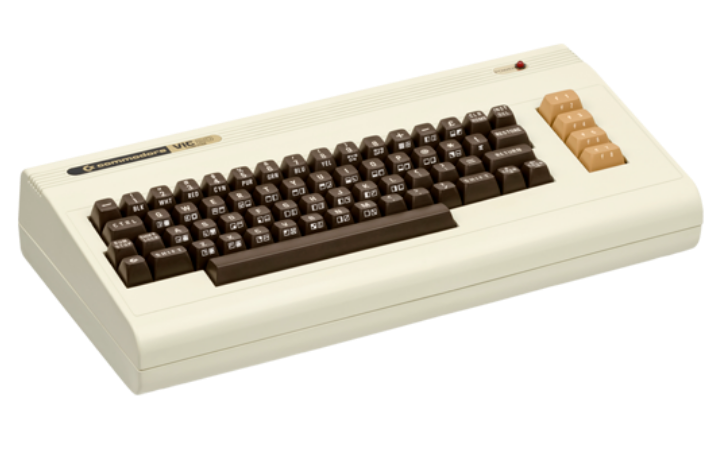
Commodore VIC-20

The Commodore VIC-20 is an 8-bit home computer that was sold by Commodore Business Machines. The VIC-20 was announced in 1980, roughly three years after Commodore’s first personal computer, the PET.

from 1984 – 1985

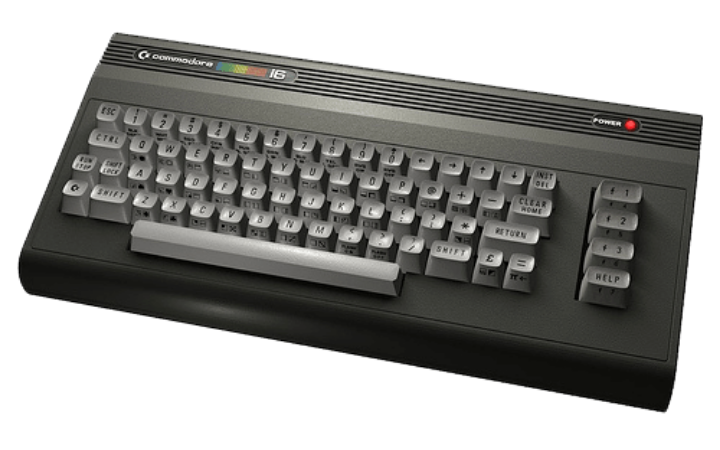
Commodore 16

The Commodore 16 is a home computer made by Commodore International with a 6502-compatible 7501 or 8501 CPU, released in 1984.

The C16 belong to the same family as the higher-end Plus/4 and are internally very similar to it (albeit with less RAM – 16 rather than 64 KB – and lacking the Plus/4’s user port and Three plus one software).

from 1982 – 1994

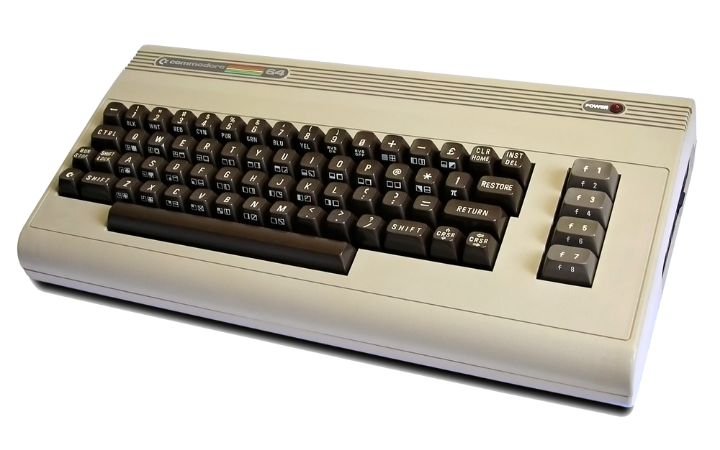
Commodore 64

This original Commodore 64 known as the breadbin model is an 8-bit home computer introduced in January 1982 by Commodore International.

The Commodore 64 had three different Kernal ROM versions, two different SID sound chip versions, a few different motherboard versions and two different cases during its lifetime.

from 1987 – 1991

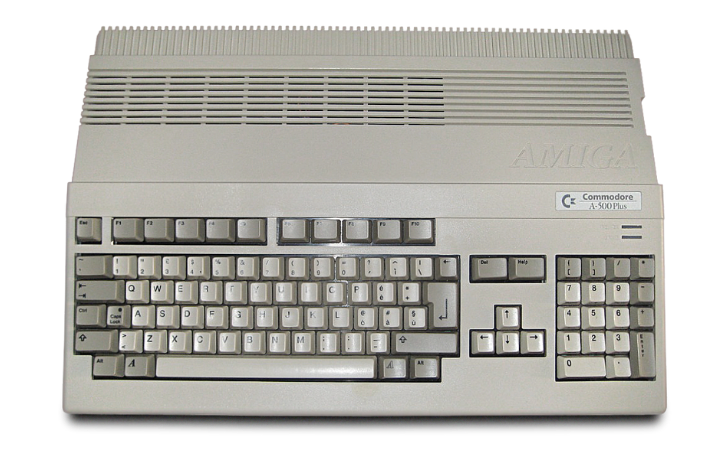
Amiga 500 Plus

The Commodore Amiga 500 Plus is an enhanced version of the original Amiga 500 computer.

It was notable for introducing new versions of Kickstart and Workbench, and or some minor improvements in the custom chips, known as the Enhanced chip Set (or ECS).

from 1987 – 1991

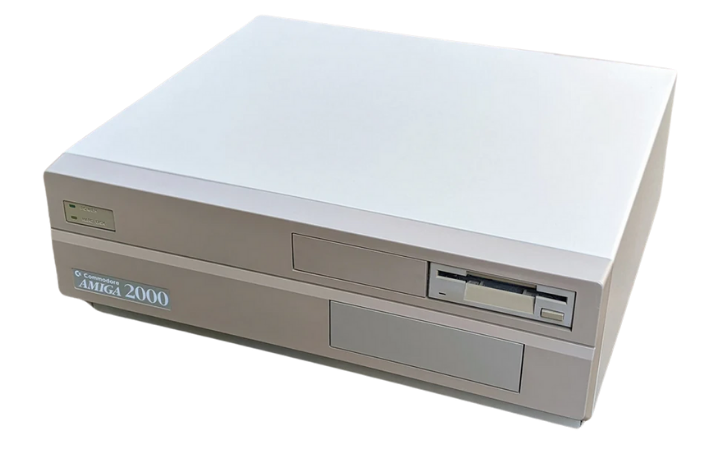
Amiga 2000

The Amiga 2000 is a personal computer released by Commodore in March 1987.

Expansion capabilities include two 3.5″ drive bays (one of which is used by the included floppy drive) and one 5.25″ bay that can be used by a 5.25″ floppy drive (for IBM PC compatibility), a hard drive, or CD-ROM once they became available.

from 1992- 1996

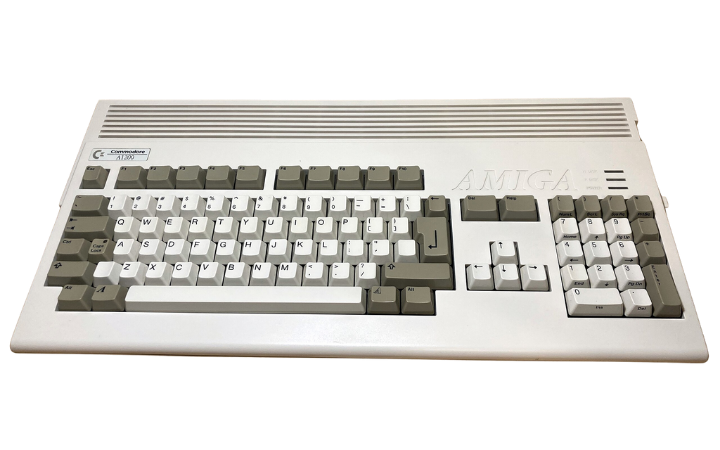
Amiga 1200

The A1200 offers a number of advantages over earlier models. Specifically, it is a 32-bit design;the 68EC020 microprocessor is faster than the 68000 and has 2 MB of RAM as standard.

The AGA chipset used in the A1200 is a significant improvement. AGA increases the color palette from 4096 colors to 16.8 million colors with up to 256 on-screen colors normally, and an improved HAM mode allowing 262,144 on-screen colors.

The graphics hardware also features improved sprite capacity and faster graphics performance mainly due to faster video memory.

from 1981 – 1994

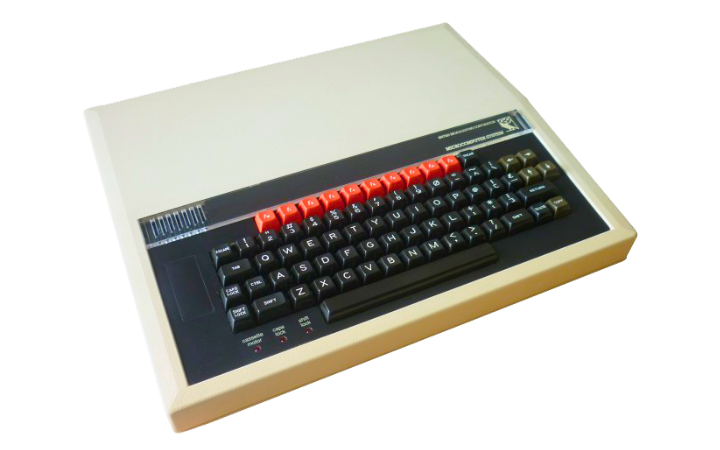
BBC Model B

The British Broadcasting Corporation Microcomputer System, or BBC Micro, is a series of microcomputers and associated peripherals designed and built by the Acorn Computer company in the 1980’s for the BBC Computer Literacy Project, operated by the British Broadcasting Corporation.

Designed with an emphasis on education, it was notable for its ruggedness, expandability, and the quality of its operating system.

from 1985- 1998

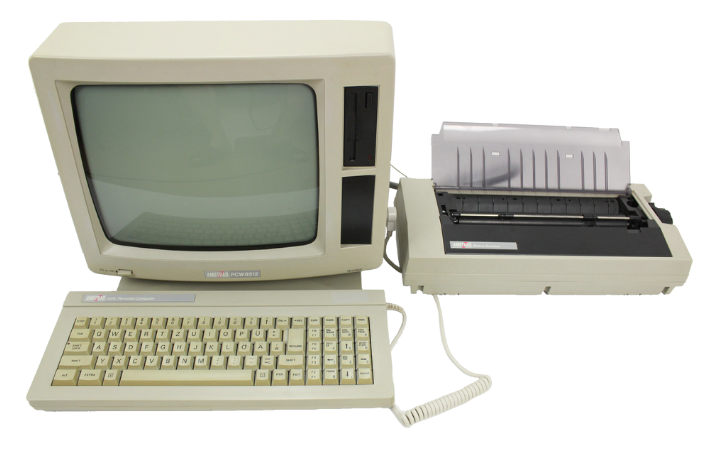
Amstrad PCW 8256

The Amstrad PCW series is a range of personal computers produced by British company Amstrad from 1985 to 1998. All models except the last included the Loco script word processing program, the CP/M Plus operating system, Mallard BASIC and the LOGO programming language at no extra cost. The AGA chipset used in the A1200 is a significant improvement. AGA increases the color palette from 4096 colors to 16.8 million colors with up to 256 on-screen colors normally, and an improved HAM mode allowing 262,144 on-screen colors. The graphics hardware also features improved sprite capacity and faster graphics performance mainly due to faster video memory.

from 1984 – 1987

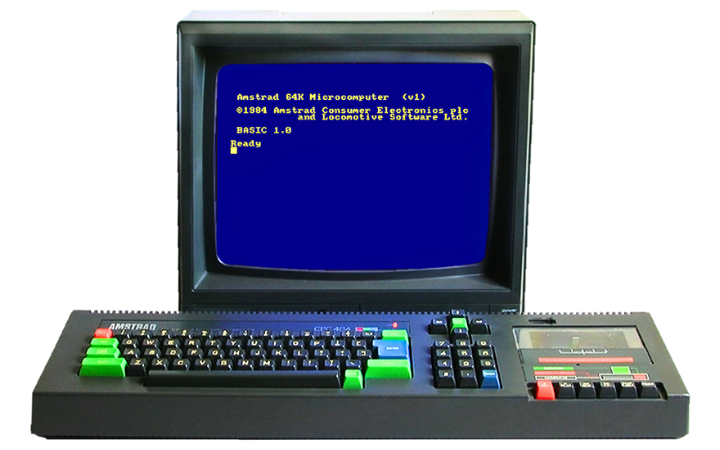
Amstrad CPC 464

The CPC 464 is the first personal home computer built by Amstrad in 1984. It was one of the bestselling and best produced microcomputers, with more than 2 million units sold in Europe.

The 464 was popular with consumers for various reasons. Aside from the joystick port, the computer, keyboard, and tape deck were all combined into one unit that attached to the monitor via two cables.

The monitor also contained the power supply unit which powered the whole unit via one wall plug. It did not have very many wires and was simple enough for even the most inexperienced user to install.
from 1982- 1992

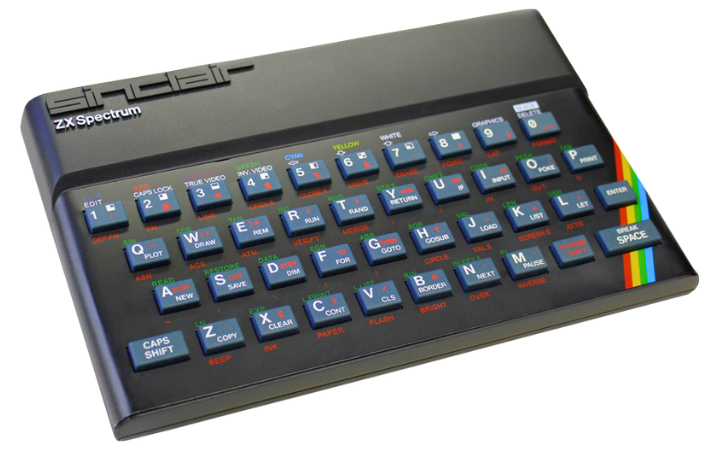
ZX Spectrum 48K

The ZX Spectrum is an 8-bit personal home computer released in the United Kingdom in 1982 by Sinclair Research. It was launched as the ZX Spectrum by Sinclair to highlight the machine’s colour display. The Spectrum was released as eight different models, ranging from the entry level with 16 KB RAM released in 1982 to the ZX Spectrum +3 with 128 KB RAM and built in floppy disk drive in 1987.

from 1985 – 1986

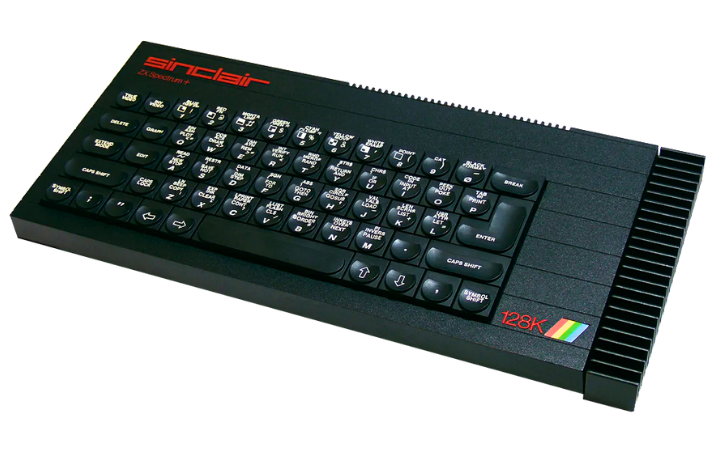
ZX Spectrum 128K

The ZX Spectrum 128 was jointly developed by Sinclair Research and Investrónica under the code-name “Derby”.

It was released first in January 1986. The 128 is often referred to by the nickname “Toastrack”, referring to the large external heatsink attached to the right-hand side of the computer.

from 1981- 1984

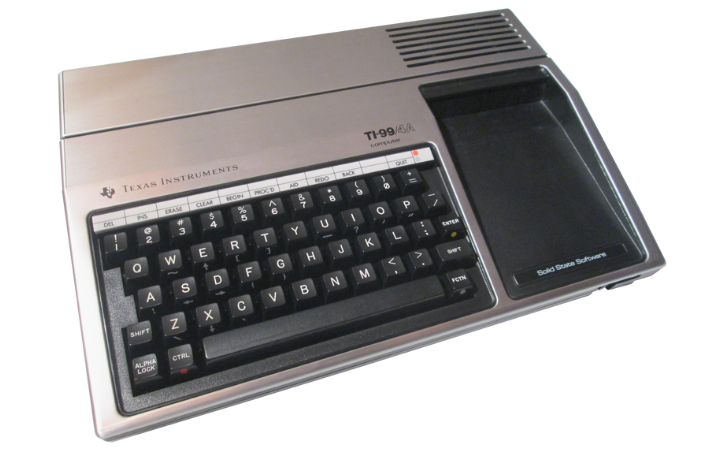
TI99/4A

The TI-99/4A is a home computer released in 1981 by Texas Instruments. It was the first 16-bit home computer. The associated video display controller provides color graphics and among the best sprite support of its era.

TI supported the 4A with peripherals, including a speech synthesizer and a “Peripheral Expansion System” box to contain hardware add-ons.

from 1977 – 1992

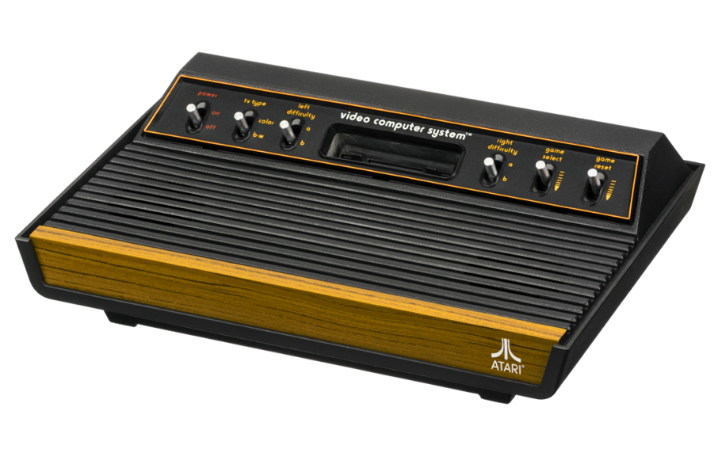
Atari 2600 Woody

The Atari 2600, originally branded as the Atari Video Computer System until November 1982, is a home video game console developed and produced by Atari, Inc. The original Atari 2600 woody released on September 11, 1977, it is credited with popularizing the use of microprocessor-based hardware and games stored on ROM cartridges.

from 1981- 1984

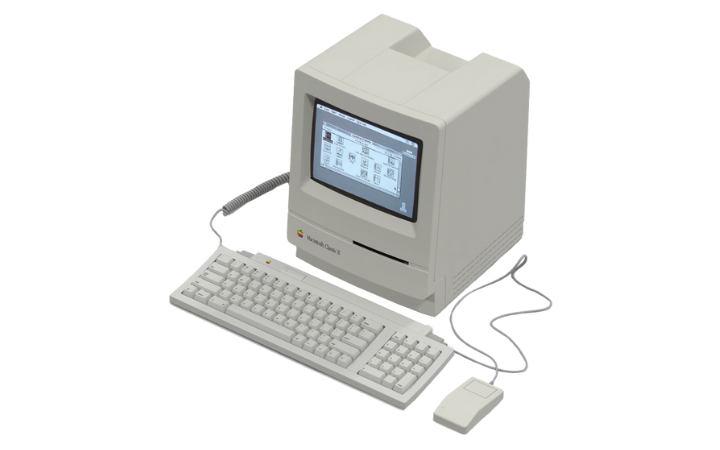
Apple Mac Classic II

The Macintosh Classic II is a personal computer designed, manufactured and sold by Apple Computer, Inc. from October 1991 to September 1993. The Classic II was powered by a 16 MHz Motorola 68030 CPU and 40 or 80 MB hard disk. The Classic II is the last black-and-white compact Macintosh, and the last desktop Macintosh to include an external floppy disk drive port.